
3D Scan Library
Our content library.
This page lists a selection of the datasets available for Storyvoxel exhibit experiences — from photogrammetry to CT and volumetric scans of specimens, objects, and environments, sourced from high-profile partners worldwide.
Each dataset can be explored on its own or combined into a custom interactive experience for your exhibition. Browse below to see what's currently available, or get in touch if you have a specific specimen or object you'd like digitized.
Human body
FULL BODY SCAN - TRAFFIC ACCIDENT
A scan of a woman who died in a road accident. The examination provides a quick overview of the dead woman's anatomy and can reveal the cause of death-in this case, a broken neck. There are also a number of visible fractures to the jaw, on the right foot, left tibia and fibula, the right knee, several pelvic fractures, and the left neck of the femur.
Data by Linköping university, Sweden
FULL BODY CT SCAN - SIGNS OF AGING
Scan of a man in his fifties in physically good health. An example of natural aging of the body is seen in the spine where the height between the first and second vertebra is reduced. You can also see calcification in the vertebrae, also a result of aging.
Data by Linköping university, Sweden
BIG BRAIN ATLAS
Brain Atlas is used by other scientists investigating specific parts of the brain. In this dataset, you will be able to explore the highest resolution 3D Brain Atlas yet made of a human brain and learn more about the brain.
STROKE PATIENT
A CT scan of a living patient who has been treated for stroke. The patient has undergone surgery for a ruptured aneurysm in a small blood vessel in the brain using a procedure called "clipping", which simply put means the burst blood vessel is repaired using a small metal clip.
Data by Linköping university, Sweden
ARTIFICIAL HEART PUMP
The heart pump fits neatly into a cavity below the heart next to the diaphragm. It connects to the left ventricle, where the blood leaves the heart. This particular type of pump is used where heart function has all but failed and conventional medical treatment is unable to help.
Data by Linköping university, Sweden
Human body - ESRF
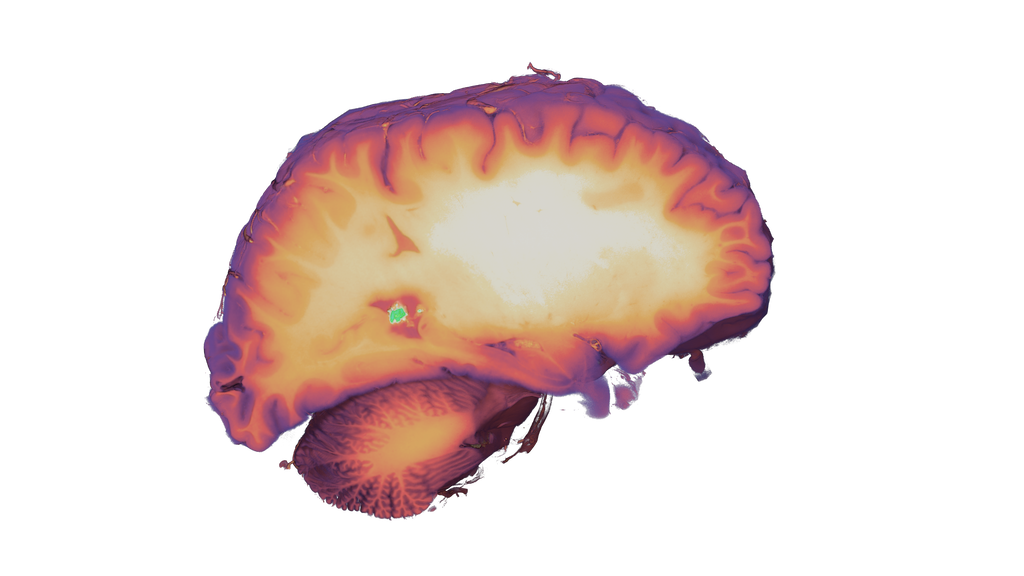
Human Brain (HiP‑CT synchrotron scan)
Ultra‑high‑resolution scan showing detailed brain structures, including grey and white matter, lobes, and internal regions.
Data by: ESRF European Synchrotron Radiation Facility (ESRF) / Human Organ Atlas
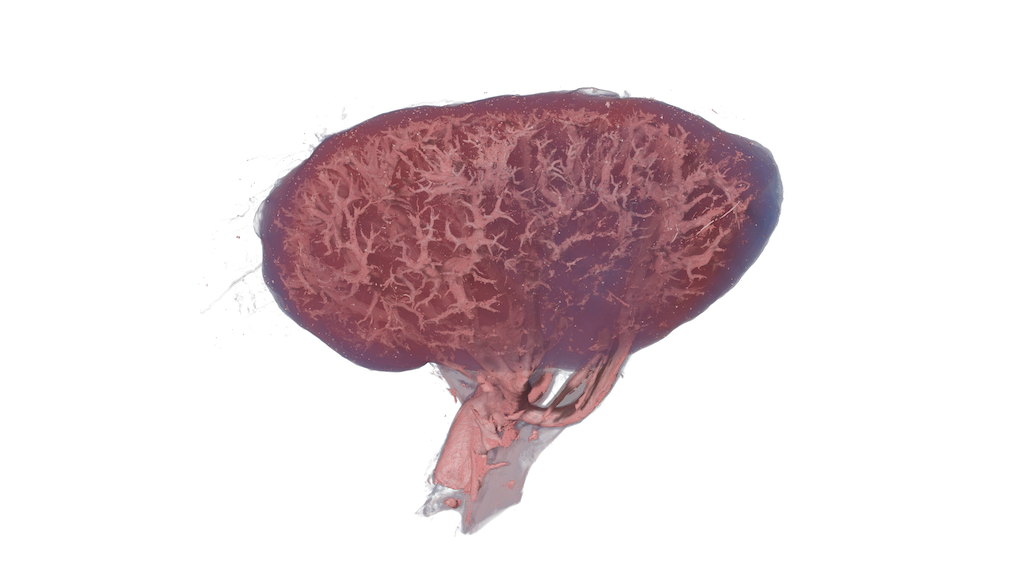
Left kidney
High‑resolution scan revealing internal structures such as nephrons, renal pyramids, and filtration systems.
Data by: ESRF European Synchrotron Radiation Facility (ESRF) / Human Organ Atlas
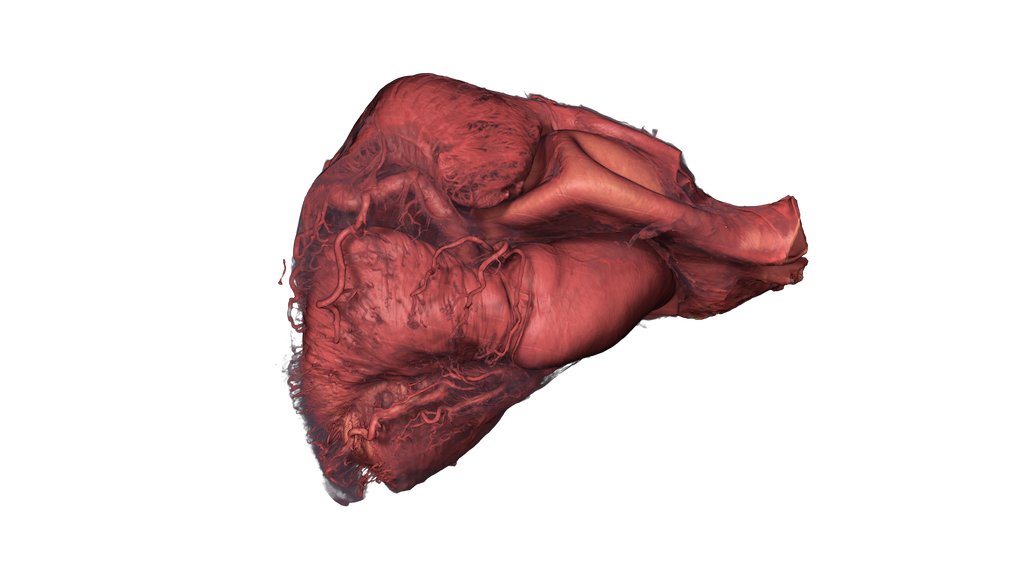
Heart (multi‑scale samples)
High‑resolution datasets showing internal cardiac structures at different levels of detail.
Data by: ESRF European Synchrotron Radiation Facility (ESRF) / Human Organ Atlas
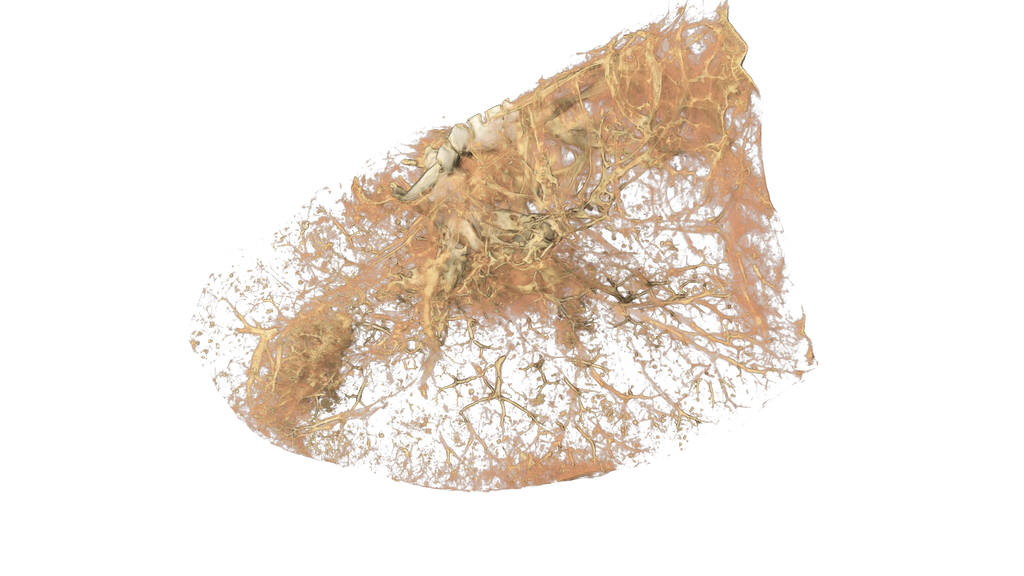
COVID‑19 Lung (Upper Left Lobe)
Synchrotron CT scan of lung tissue showing structural damage caused by COVID‑19 (ARDS), including alveolar and vascular changes.
Data by: ESRF European Synchrotron Radiation Facility (ESRF) / Human Organ Atlas
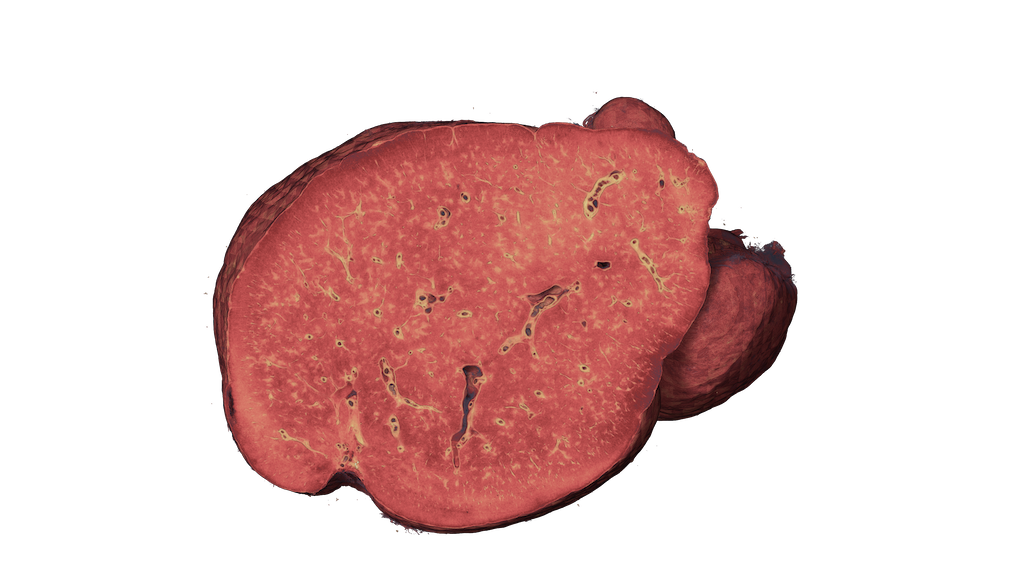
Spleen
Detailed scan of lymphatic and blood‑filtering structures, including red and white pulp.
Data by: ESRF European Synchrotron Radiation Facility (ESRF) / Human Organ Atlas
Human body - Implants
POLAND SYNDROME
CT scan acquisition of a living patient suffering of a Poland Syndrome congenital disease. Poland Syndrome is a partial or total lack of the Pectoralis Major muscle. It can be corrected by inserting a 3D custom-made implant trough surgery.
Data by IMA Solutions SARL, France
PECTUS EXCAVATUM
CT scan acquisition of a living patient suffering of a Pectus Excavatum congenital deformation. Pectus Excavatum is a deformation of the ribs and sternum. With a frequency of 1 over 300 births, it is the most common thoracic congenital deformation. This patient underwent a surgery to place a 3D custom-made implant to correct the deformation.
Data by IMA Solutions SARL, France
AIRWAY STENOSIS DISEASE
Chest CT scan with contrast of a living patient suffering from an airway stenosis. The patient cannot breathe normally because of a reduction of the section of the airway. Treatment consists in implanting an airway stent to get a normal airway section.
Data by IMA Solutions SARL, France
MANDIBULAE RESECTION - CANCER
Face CT scan of a living patient. The mandibulae bone as been partially resected to remove a cancer tumor. Patient will undergo a surgery to reconstruct the missing mandibulae part.
Data by IMA Solutions SARL, France
MAXILLOFACIAL - PROTRUDING MANDIBULAE
Face CT scan of a living patient. The mandibulae bone is protruding meaning a bad alignment of upper and lower teeth. The patient will undergo a surgery to realign correctly the mandibulae with the maxillary bone.
Data by IMA Solutions SARL, France
Human body - Corona
SPIKE PROTEIN
The SARS-CoV-2 spike proteins play a central role in infecting our human cells, and it is a target for both antibodies and vaccine designers. With this data set users can study a real Spike protein from the SARS-CoV-2 virus scanned using cutting edge CRYO Electron Microscope technology.
Data by SciLife Lab at The Karolinska Institute, Stockholm
LUNGS
These CT scans from a pair of COVID-19 infected lungs allow visitors to experience what kind of visual and physical damage that the SARS-COV-2 virus can do and what it looks like on the inside of our bodies. Therefor better understand the importance of keeping each other safe and help stop the spreading.
Data by Dr. Altair Costa, Thoracic surgeon at the Federal University Hospital in Sâo Paolo, Brazil, and Norman Gellada, Imaging specialist, 3D and advanced visualization at Cedars-Sinai hospital in Los Angeles.
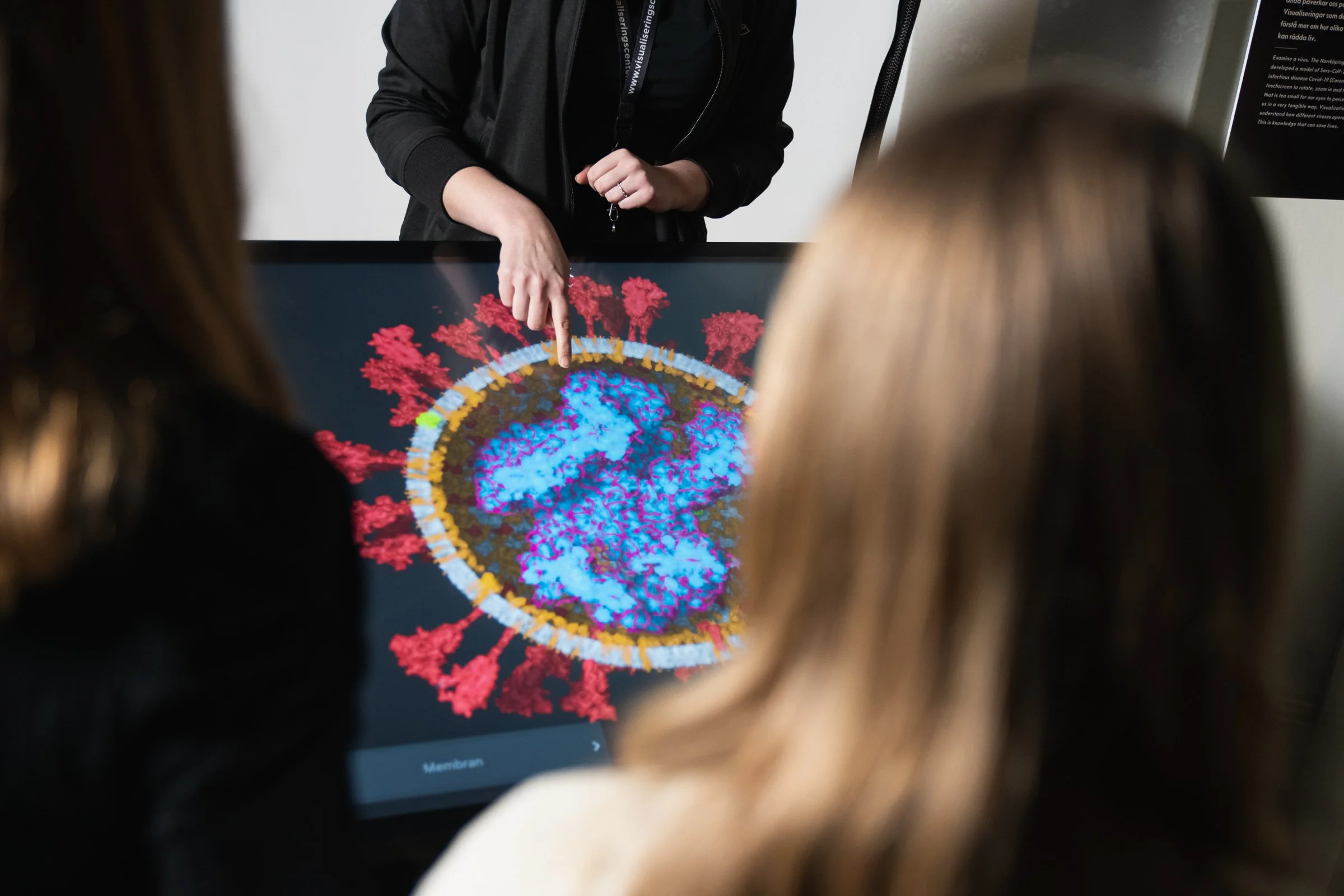
SARS-COV-2 VIRUS
To unmask the virus and making it visible to our human eyes, visitors can cut into a SARS-CoV-2 virus particle and study its structure and viral properties. In a world where millions of people live under the threat of COVID-19 it is of vital importance to gain a better understanding of how the virus actually works, in search for a cure.
Data by Nanographics, Vienna, Austria
Human Body - Full body scan
INTERNAL ORGANS
Witness the appearance of a real heart or locate the position of a kidney. Ben Body comes equipped with organs beautifully visualized in a separate layer which makes virtual autopsies more thorough than ever.
Data by Benjamin Moreno, IMA Solutions, France
VASCULAR SYSTEM
Learn more about the great arteries and organs that keep our blood circulating and our body going. Through the use of contrast fluid during scanning a real-life vascular system was made visible.
Data by Benjamin Moreno, IMA Solutions, France
LYMPHATIC SYSTEM
This visualization is designed by scientists for a deeper learning experience through a great range of visualized data, like a realistically modeled lymphatic system.
Data by Benjamin Moreno, IMA Solutions, France
NERVOUS SYSTEM
Reach a deeper understanding of the complexity of the human body with this modeled representation of a complete nervous system.
Data by Benjamin Moreno, IMA Solutions, France
Insects
DUNG BEETLE (SCARABAEUS SP.)
Ancient Egyptians thought very highly of the scarab (from their taxonomic family name, Scarabaeidae). They believed the dung beetle kept the Earth revolving like a giant ball of dung, linking the insect to Khepri, the Egyptian god of the rising sun.
Data by Professor Javier Alba-Tercedor at University of Granada, Spain
MASSON BEE (OSMIA RUFA)
Mason bees are named for their habit of using mud or other "masonry" products in constructing their nests. Unlike honeybees or bumblebees, Mason bees are solitary; every female is fertile and makes her own nest, and no worker bees for these species exist.
Data by Professor Javier Alba-Tercedor at University of Granada, Spain
HUMAN LOUSE EGG (PEDICULUS HUMANUS CAPITIS)
A 3D scan of a human louse egg curated, scanned, and interpreted by Professor Javier Alba-Tercedor at the University of Granada, Spain.
Data by Professor Javier Alba-Tercedor at University of Granada, Spain
DESERT ANT (CATAGLYPHIS VELOX)
Desert ants are adapted to dry and hot habitats such as deserts. They are scavengers and feed on other insects which have succumbed to heat stress. Desert ants use their vision for navigating and the routes are stored in long-term memory.
Data by Professor Javier Alba-Tercedor at University of Granada, Spain
HOUSE FLY (MUSCA DOMESTICA)
The Housefly is the most common fly species found in habitations. House flies can carry many different pathogens, such as those causing typhoid, cholera, salmonellosis, and tuberculosis.
Data by Professor Javier Alba-Tercedor at University of Granada, Spain
Marine life
SHORT-FIN MAKO (ISURUS OXYRINCHUS)
The short-fin Mako is one of the most beautiful of all of the sharks. It is also the fastest with burst speeds topping 60 mph. Known for making spectacular leaps 6m out of the water, shortfin makos are highly sought after by sports fishermen. (Juvenile female)
Data by Professor Gavin Naylor, University of Florida, US
SOUTHERN STINGRAY (HYPANUS AMERICANUS)
Southern stingrays occur in coastal waters of the western Atlantic Ocean Gulf of Mexico, Caribbean Sea, to Brazil. They can often be found around coral reefs and sea grass beds. (Male)
Data by Professor Gavin Naylor, University of Florida, US
CLEARNOSE SKATE (ROSTRORAJA EGLANTERIA)
The Clear-nose skate is common in waters off the North West Atlantic coast from New England to the Gulf of Mexico. It is widely used in biomedical research as it is easy to maintain in laboratory conditions. Like all skates, it lays eggs in capsules
known as "mermaids purses" that often wash up on shores.
Data by Professor Gavin Naylor, University of Florida, US
LOBSTER
Data by n/a
COWNOSE RAY (RHINOPTERA BONASUS)
Cownose rays are probably best known for their spectacular seasonal aggregations where thousands of individuals migrate en masse along the Western North Atlantic coast. (Female)
Data by Professor Gavin Naylor, University of Florida, US
SCALLOPED HAMMERHEAD (SPHYRNA LEWINI)
The scalloped hammerhead has an unusual and distinctive structure of their heads, which are flattened and laterally extended into a "hammer" shape called a cephalofoil, giving the species its characteristic "scalloped" appearance. (Female)
Data by Professor Gavin Naylor, University of Florida, US
PENGUIN
Data by CMIV, Sweden
Amphibians & Reptiles
Saffron-bellied Frog (Chaperina fusca)
Data by Florida Museum of Natural History, US
Colostethus sylvaticus
Data by Florida Museum of Natural History, US
Crocodile
Data by Blå Stjärnan Animal Hospital, SE
Gabon Viper
Scans by Kolmården Wildlife Park, Sweden.
Saffron-bellied Frog (Chaperina fusca)
Data by Florida Museum of Natural History, US
Sabana Surinamoad (Pipa parva)
Data by Florida Museum of Natural History, US
Turtle
Data by Blå Stjärnan Animal Hospital, SE
Wild animals
CHIMPANZEE (PAN TROGLODYTES)
The chimpanzee is an 11-year-old male. He weighs 65 kg and comes from the Kolmården Zoo in Sweden. A chimpanzee's skeleton is similar to a human's but differs in a number of ways.
Scans by Kolmården Wildlife Park, Sweden.
GREY SEAL (HALICHOERUS GRYPUS)
A fullbody scan of a The grey seal is found on both shores of the North Atlantic Ocean. It is a large seal, with males reaching 3 m long and weighing between 170 and 310 kg. The seal was born at the Kolmården zoo in Sweden in 2009. It was only 28 days old when it was scanned in the CT-scanner.
Scans by Kolmården Wildlife Park, Sweden.
MOOSE (ALCES ALCES)
Scans by Kolmården Wildlife Park, Sweden.
BROWN BEAR
Scans by Kolmården Wildlife Park, Sweden.
WILD BOAR
Scans by Kolmården Wildlife Park, Sweden.
WOLF
Scans by Kolmården Wildlife Park, Sweden.
WOLVERINE
Scans by Kolmården Wildlife Park, Sweden.
SNOW LEOPARD
Scans by Kolmården Wildlife Park, Sweden.
GOLDEN EAGLE (AQUILA CHRYSAETOS)
This eagle was found in the southern part of Sweden in 2008. It was injured in one of the wings and was placed in rehabilitation for a couple of weeks. The eagle was then transferred to the Kolmården zoo. It's a female and weighs 5.2 kg.
Scans by Kolmården Wildlife Park, Sweden.
LION (PANTHERAL LEO)
The lion is a three year old female called "Shira". She comes from the Kolmården Zoo in Sweden and weighs 122 kg. An old fracture can be seen in one of the vertebrae close to the scapula and pieces of bone are visible in the stomach.
Scans by Kolmården Wildlife Park, Sweden.
Domestic animals
GOAT
Scans by Kolmården Wildlife Park, Sweden.
DOG - CHIHUAHUA
Scans by Blå Stjärnan Animal Hospital, Sweden.
CAT - #1
Scans by Blå Stjärnan Animal Hospital, Sweden.
DOG - HUNTING TERRIER
Scans by Blå Stjärnan Animal Hospital, Sweden.
HEN
Scans by Kolmården Animal and Wildlife Park, Sweden.
SHEEP
Scans by Kolmården Wildlife Park, Sweden.
DOG - IRISH SETTER
Scans by Blå Stjärnan Animal Hospital, Sweden.
CAT - #2
Scans by Blå Stjärnan Animal Hospital, Sweden.
DOG - MIXED RACE
Scans by Blå Stjärnan Animal Hospital, Sweden.
HORSE
Scans by Kolmården Animal and Wildlife Park, Sweden.
Space
ALLENDE - A CARBONACEOUS CHONDRITE
Get the inside story on a true rock star. The Allende meteorite is one of the world's most famous - and well-studied - meteorites. The silicate body of the meteorite contains carbon (= carbonaceous) and surrounds small mineral inclusions called chondrules (= chondrite). Only about 4% of all meteorites are
carbonaceous chondrites.
Data by The Field Museum of Natural History, Chicago, US
BOTTEN 003 - A FOSSIL METEORITE
466 million years ago two large asteroids collided violently, sending meteorites raining down on Earth across the Globe. This one fell to the seafloor, where it was preserved as a fossil until it was uncovered in a quarry in Sweden in 2002. See what we're learning from this ancient space rock.
Data by The Field Museum of Natural History, Chicago, US
NWA 11115 - A MARTIAN METEORITE
NWA stands for Northwest Africa, where this meteorite was found in 2015. The number 11115 means that this is the 11,115th meteorite found in the region. In 2016 Field Museum scientists, together with an international team of colleagues, confirmed that this is a piece of Mars's crust knocked from the surface of that planet by an asteroid.
Data by The Field Museum of Natural History, Chicago, US
CHELYABINSK
The Chelyabinsk meteorite captured the world's attention when it exploded in Russia in 2013. Scientists study fragments like this one to understand their cosmic origins. See what we're discovering.
Data by The Field Museum of Natural History, Chicago, US
Botanicals
ORCHID
Data by Kew Garden, Wakehurst, UK
WOOD SAMPLE
Data by Kew Garden, Wakehurst, UK
BRAZIL NUT
Data by Kew Garden, Wakehurst, UK
WALNUT
Data by The Field Museum of Natural History, Chicago, US
Natural History
FLY IN AMBER
Amber-fossilized tree resin-can preserve the anatomy of a trapped insect down to the tiny hairs on the legs of a fly. Now with new powerful x-rays, scientists can see more than ever.
Data by The Field Museum of Natural History, Chicago, US
SPIDER IN AMBER
Picking out the spider in this amber piece isn't easy for the untrained, or even trained, eye. The specimen is hidden by wood pieces. However, thanks to powerful x-rays, we can finally take a close look.
Data by The Field Museum of Natural History, Chicago, US
ROVE BEETLE IN AMBER
This rove beetle specimen is surrounded by cracks and air bubbles, making details hard to see with traditional microscopes. With high-resolution scans, scientists can remove obstructions and get a close look at and inside the specimen.
Data by The Field Museum of Natural History, Chicago, US