
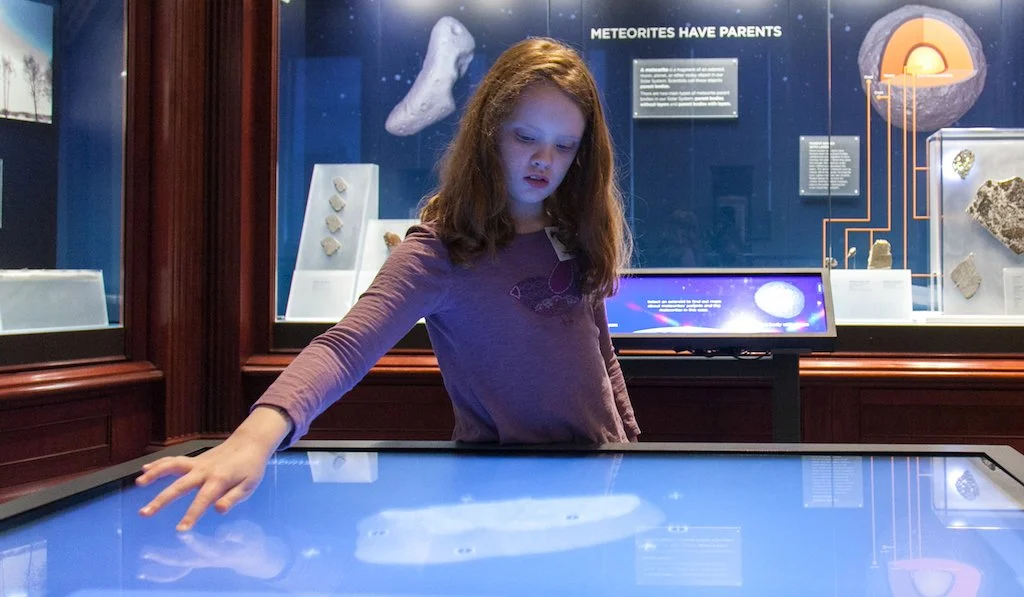
Explore meteorites from the inside out—using real scientific data to uncover the history of our solar system through interactive discovery.

Exhibit at a Glances
World‑class specimens – Built on authentic meteorites from the Field Museum’s internationally renowned collection
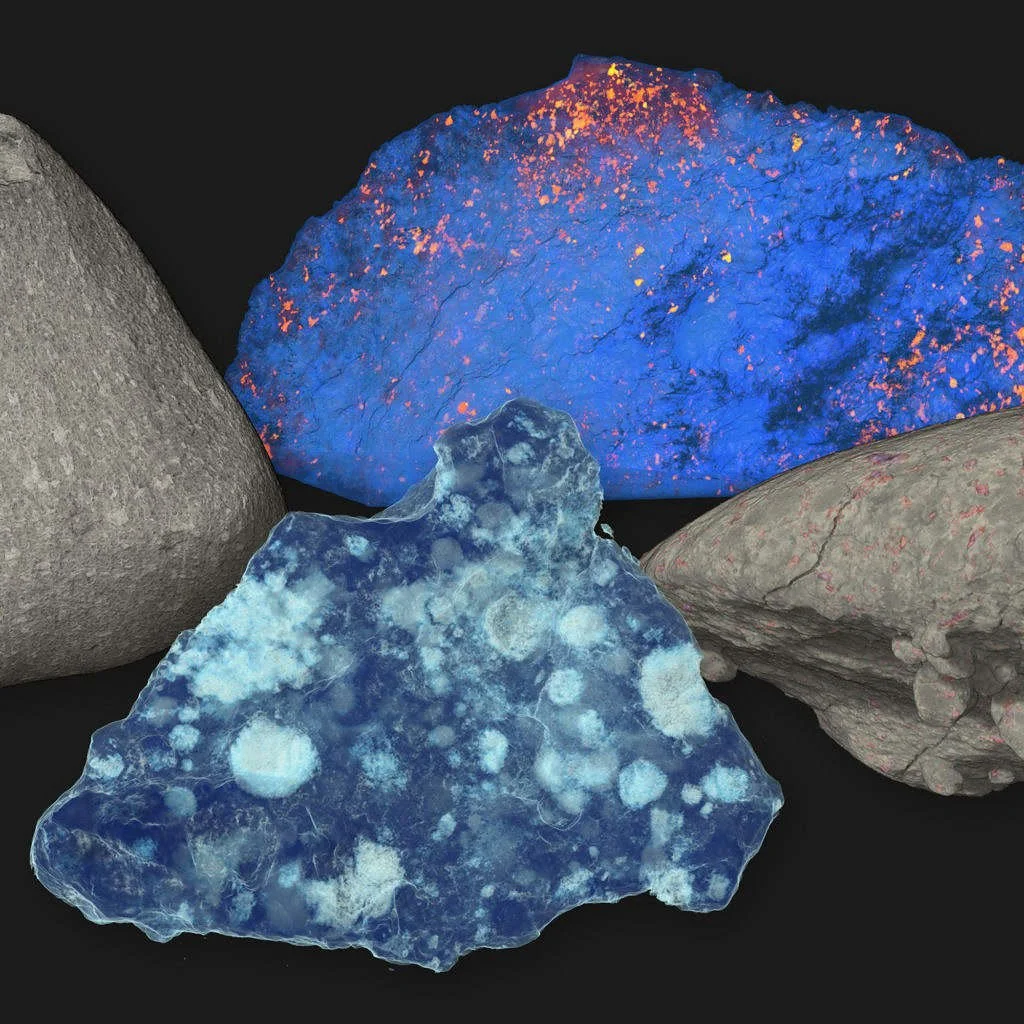
Real scientific imaging – Interactive 3D visualisations based on high‑resolution scan data used by researchers
Explore cosmic origins – Enables hands‑on exploration of meteorite structure, composition, and history
Diverse space rocks – Includes carbonaceous chondrites, Martian meteorites, fossil meteorites, and recent impact events
Research meets public discovery – Visitors explore the same data scientists use to study the early solar system
Non‑destructive insight – Reveals internal structures without cutting or damaging rare specimens
Designed for learning – Suitable for natural history museums, planetariums, science centres, and education
Featured in the exhibit
ALLENDE - A CARBONACEOUS CHONDRITE
Get the inside story on a true rock star. The Allende meteorite is one of the world's most famous - and well-studied - meteorites. The silicate body of the meteorite contains carbon (= carbonaceous) and surrounds small mineral inclusions called chondrules (= chondrite). Only about 4% of all meteorites are
carbonaceous chondrites.
Data by The Field Museum of Natural History, Chicago, US
BOTTEN 003 - A FOSSIL METEORITE
466 million years ago two large asteroids collided violently, sending meteorites raining down on Earth across the Globe. This one fell to the seafloor, where it was preserved as a fossil until it was uncovered in a quarry in Sweden in 2002. See what we're learning from this ancient space rock.
Data by The Field Museum of Natural History, Chicago, US
NWA 11115 - A MARTIAN METEORITE
NWA stands for Northwest Africa, where this meteorite was found in 2015. The number 11115 means that this is the 11,115th meteorite found in the region. In 2016 Field Museum scientists, together with an international team of colleagues, confirmed that this is a piece of Mars's crust knocked from the surface of that planet by an asteroid.
Data by The Field Museum of Natural History, Chicago, US
CHELYABINSK
The Chelyabinsk meteorite captured the world's attention when it exploded in Russia in 2013. Scientists study fragments like this one to understand their cosmic origins. See what we're discovering.
Data by The Field Museum of Natural History, Chicago, US