
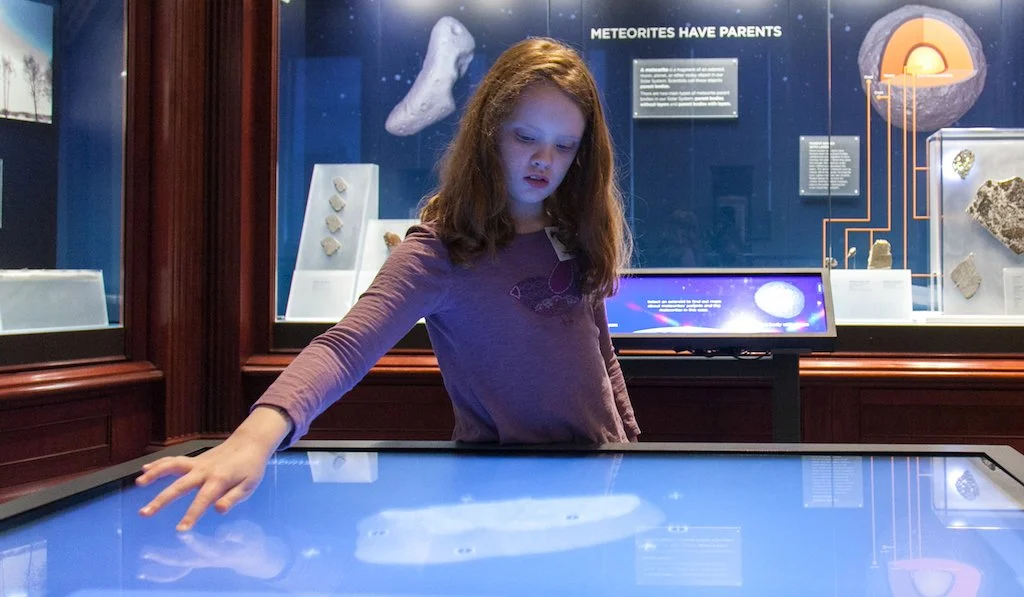
Explore insects preserved in amber like never before—using powerful X‑ray imaging to reveal ancient life hidden inside stone.

Exhibit at a Glances
Real fossil specimens – Built on authentic amber samples from the Field Museum of Natural History, Chicago
Advanced X‑ray imaging – Uses high‑resolution 3D X‑ray scans to reveal anatomy hidden for millions of years
See beyond the surface – Allows exploration through cracks, air bubbles, and debris that obscure traditional views
Explorable ancient life – Interactive 3D visualisation of fossilised insects, including flies, beetles, and spiders
Research‑grade data – Visitors explore the same datasets used by scientists studying insect anatomy and evolution
Non‑destructive insight – Reveals internal structures without physically altering these rare and fragile specimens
Ideal for public engagement – Designed for natural history museums, science centres, and education settings
Featured in the exhibit
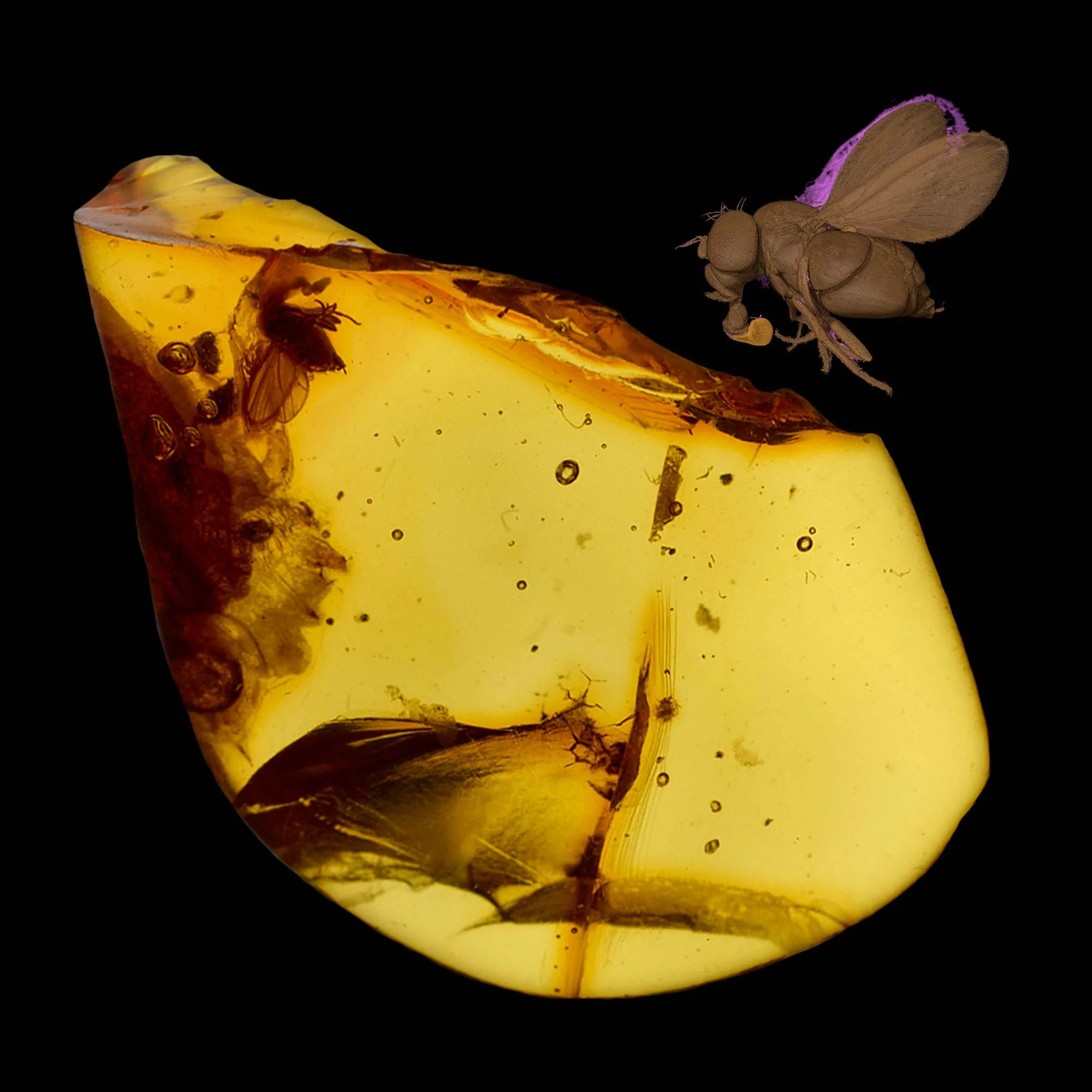
FLY IN AMBER
Amber-fossilized tree resin-can preserve the anatomy of a trapped insect down to the tiny hairs on the legs of a fly. Now with new powerful x-rays, scientists can see more than ever.
Data by The Field Museum of Natural History, Chicago, US
SPIDER IN AMBER
Picking out the spider in this amber piece isn't easy for the untrained, or even trained, eye. The specimen is hidden by wood pieces. However, thanks to powerful x-rays, we can finally take a close look.
Data by The Field Museum of Natural History, Chicago, US
ROVE BEETLE IN AMBER
This rove beetle specimen is surrounded by cracks and air bubbles, making details hard to see with traditional microscopes. With high-resolution scans, scientists can remove obstructions and get a close look at and inside the specimen.
Data by The Field Museum of Natural History, Chicago, US