

British Museum
Revealing the life and death of Gebelein Man through explorable CT scans
Storyvoxel delivered an interactive installation at the British Museum that allows visitors to explore a 5,500‑year‑old Egyptian mummy—known as Gebelein Man—using authentic CT scan data. Permanently installed in the museum’s Early Egypt gallery, the exhibit enables visitors to explore the mummy layer by layer and uncover insights about his life, health, and death.
The installation transforms advanced medical imaging into a shared, public exploration—bringing modern science into direct dialogue with one of the world’s most significant archaeological collections.
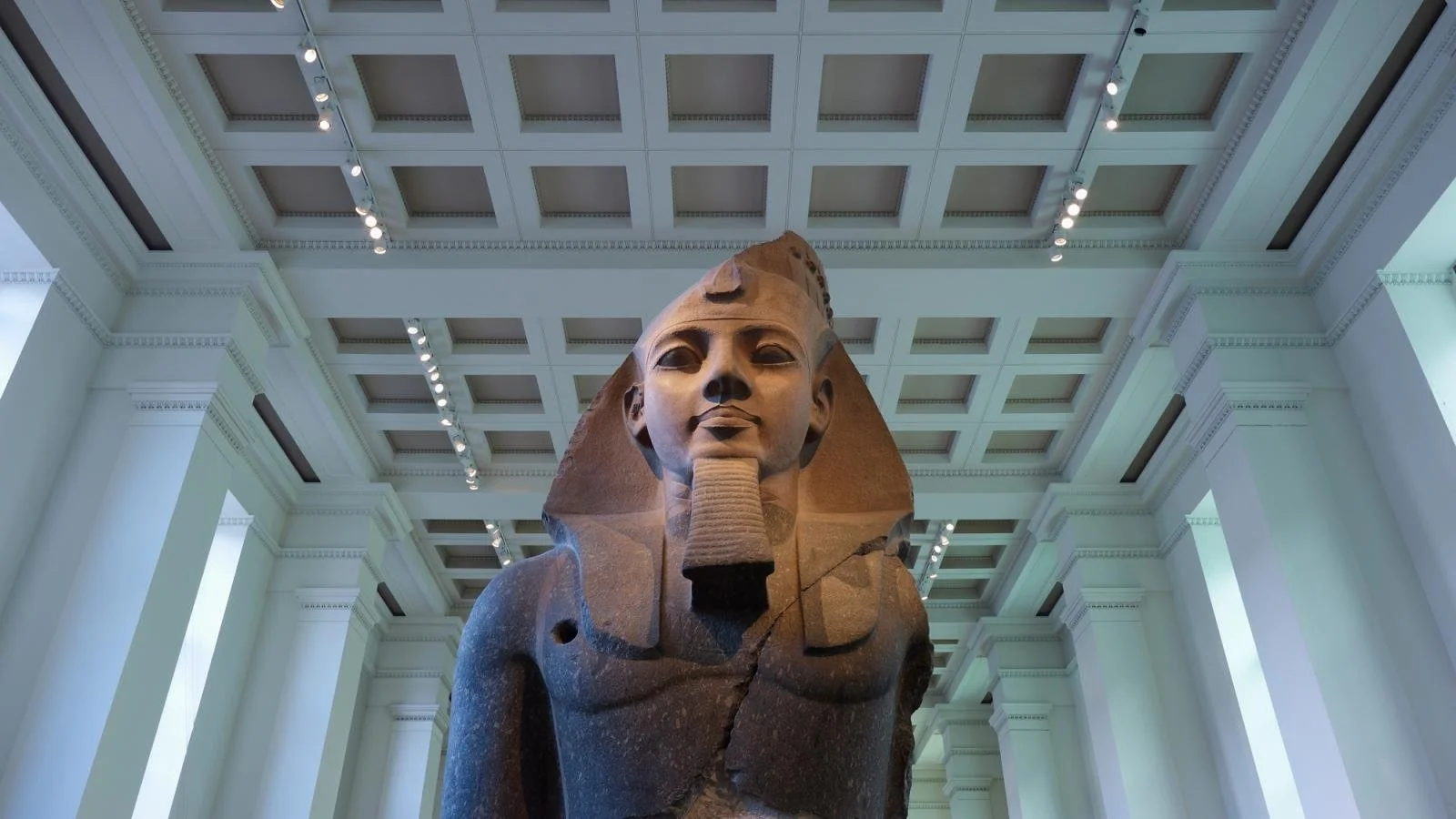
Cold case - Solving a 5500 year old murder mystery.
The challenge
Gebelein Man is one of the best‑preserved individuals from Ancient Egypt, discovered in Upper Egypt in 1896 and displayed at the British Museum for decades. While visually compelling, traditional display methods limited how much could be communicated about the individual beyond surface appearance.
The museum wanted a way to investigate and present new scientific findings—derived from CT scans—while making them accessible and engaging for both researchers and the general public, without handling or damaging the fragile remains.

The solution
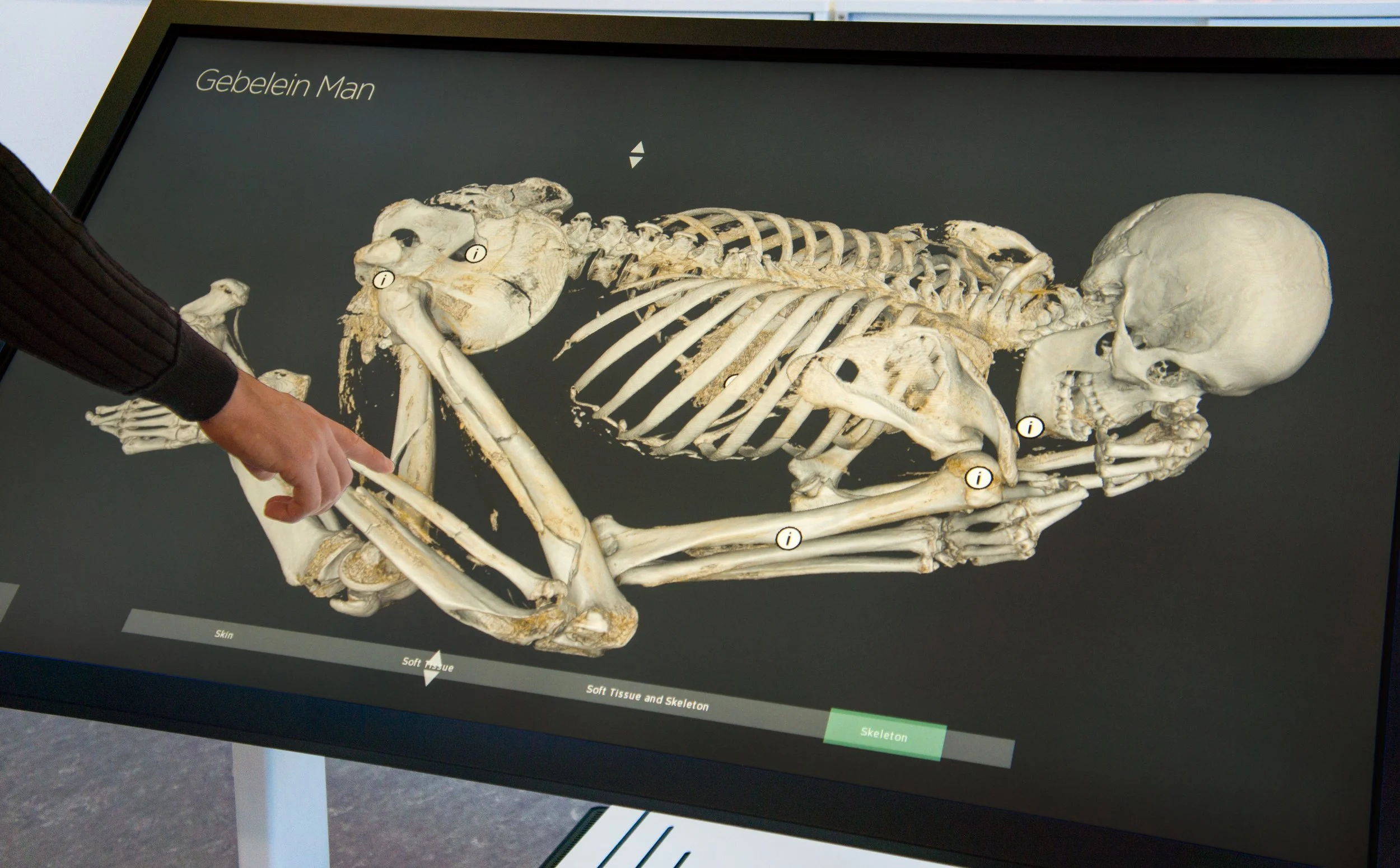
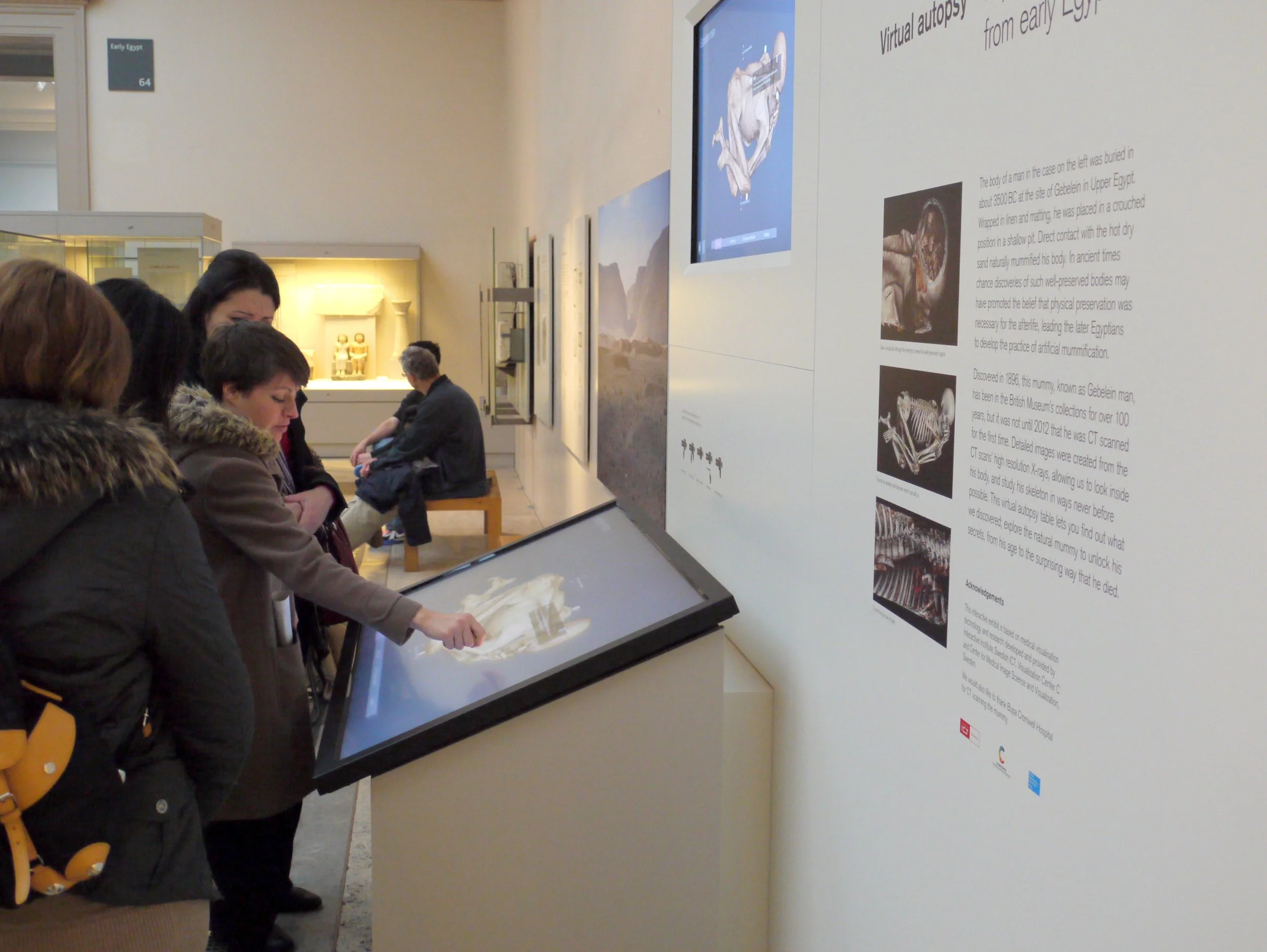
In collaboration with British Museum curators and medical experts, Storyvoxel supported the processing and visualisation of high‑resolution CT scans captured in 2012. Using the Inside Explorer platform, the data was transformed into an interactive 3D experience deployed on a 55‑inch touch‑based table, integrated into a custom‑built housing within the gallery.
The solution enables both visitors and researchers to explore the interior of the mummy virtually—rotating, slicing, and revealing anatomical structures through intuitive interaction, grounded entirely in real scientific data.
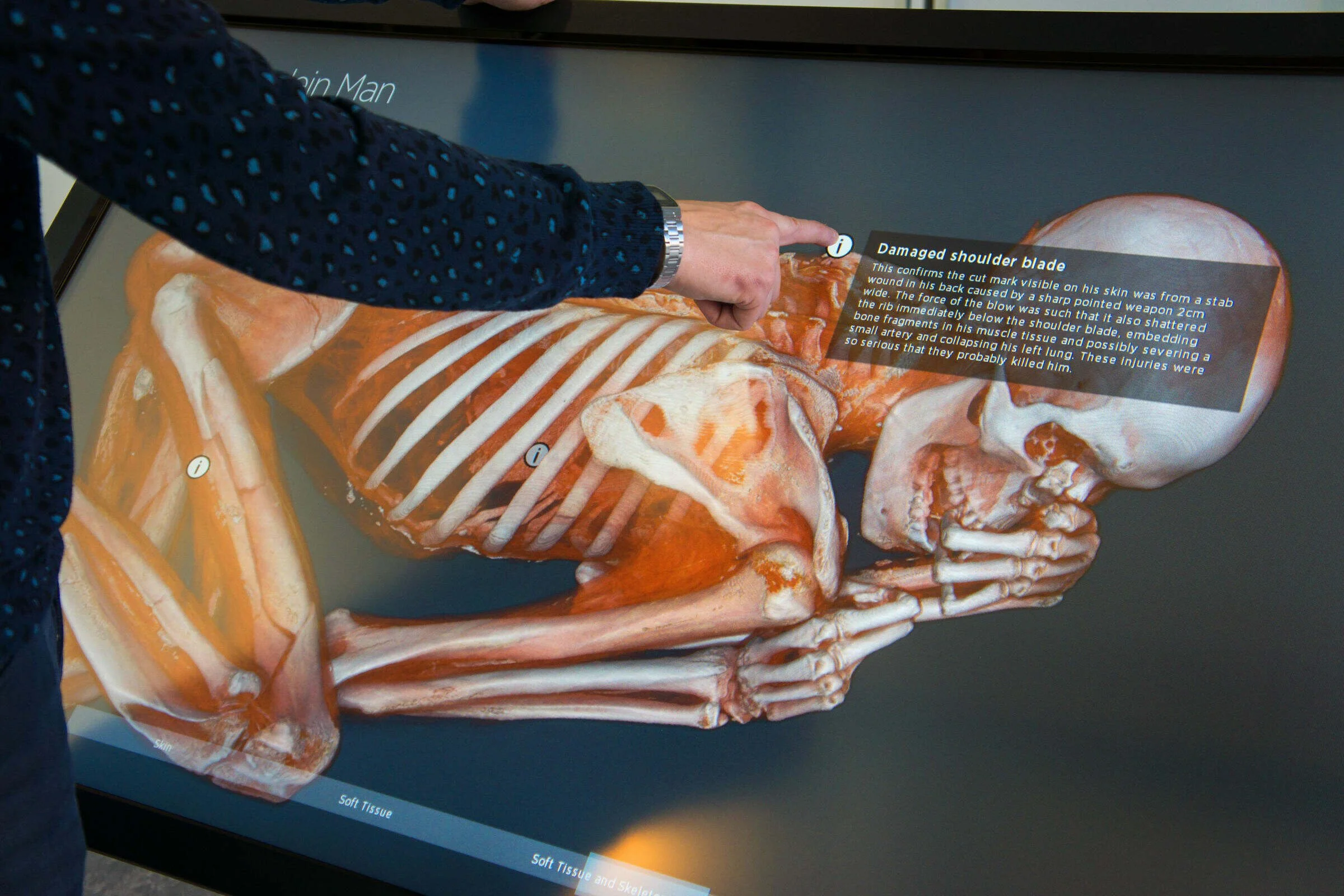
Scientific insight through exploration
The interactive exploration reveals detailed information about Gebelein Man’s sex, age, health, and physical condition. Analysis of skeletal features confirmed he was male and likely between 18 and 21 years old at the time of death. Dental structures, visible for the first time, showed minimal wear and no significant disease.
Most significantly, the CT visualisations revealed a fatal injury: a penetrating wound beneath the left shoulder blade caused by a sharp weapon. The severity of the injury and lack of healing indicated this was the cause of death—evidence pointing to a deliberate act of violence rather than illness or accident.
Media coverage
The findings revealed through the interactive CT exploration captured significant international attention. The story was widely covered by major global media outlets across print, online, and broadcast channels, highlighting how modern imaging and interactive exploration can transform understanding of ancient history.
Coverage included features by organisations such as BBC News, The Times, Daily Mail, ABC News, CBS News, CTV, and ITV, helping bring the research and the museum’s work to a broad international audience.
The result
The Inside Explorer installation bridges archaeology, medical imaging, and public engagement. It preserves scientific integrity while opening access to complex research findings, allowing visitors to explore real evidence and develop their own understanding of the past.
The project exemplifies how Captured Reality can transform museum storytelling—making rare, fragile heritage explorable without compromise.
This technology allows us to learn more about life and death in ancient Egypt, but most importantly our visitors can take part in that exploration and discovery process.”
— Neal Spencer, Keeper of Ancient Egypt and Sudan, British Museum
Key outcomes
A 5,500‑year‑old mummy made explorable using authentic CT scan data
Shared, interactive access to scientific findings in a public museum setting
New insights into ancient life and death revealed without physical intervention
High international media exposure through data‑driven storytelling
Permanent installation supporting long‑term public engagement